

A heat pump has done a lot of the heavy lifting in plenty of Cotswold homes over the past few years. Solar PV chipped away at the bills further. There’s one more thing most households still haven’t added, and it’s the one that properly shifts how much you actually pay: battery storage.
Pair a battery with the right tariff and you mostly stop paying peak-rate electricity to run your heat pump. You buy power cheaply overnight, hold onto it, and use it during the day when the grid would otherwise charge you three or four times more. Same energy. Different price.
How off-peak charging works

A home battery sits in the middle of everything, the grid, your solar panels, and the rest of the house. Overnight, when electricity is cheapest, it fills up. Once the daytime rate kicks in and the heat pump, oven, kettle, or EV want power, they take it from the battery instead of the grid. You haven’t used any less energy. You’ve just stopped paying peak prices for most of it.
The tariffs that make it work
A few UK tariffs are built for this kind of setup:
- Octopus Cosy is the one designed specifically for heat pump homes. You get three discounted windows a day, with a long cheap stretch in the early morning that lets the battery charge before peak and lets the heat pump itself run on cheaper power.
- Octopus Go gives you a flat five-hour cheap window from 12.30am to 5.30am. Originally aimed at EV owners, but it’s one of the simplest ways to charge a home battery overnight.
- Intelligent Octopus Flux is for households that already have solar and battery. It pays a strong export rate at peak times, so you can sell stored energy back when the grid wants it most.
- EDF GoElectric and British Gas Electric Driver also run off-peak windows worth checking against your usage pattern.
Prices and eligibility change all the time, so check current rates before you switch. If any of the terms feel new, our home renewables glossary covers them in plain English.
Why we recommend around 20 kWh for heat pump homes
A typical four-bedroom Cotswold or Gloucestershire home running a heat pump uses somewhere between 25 and 40 kWh of electricity a day in winter. To run most of that on off-peak power, you need a battery big enough to carry the household from morning to the next cheap window.
20 kWh is usually about right. Enough to power the heat pump, the hot water cycle, and the rest of the household through the daytime peak, but not so much that you’re paying for capacity you’ll never touch. Smaller homes, or homes without a heat pump, can usually drop to 10 or 13 kWh and still save plenty.
It is the bit most installers get wrong. We’ve seen homeowners sold a 5 kWh battery alongside a heat pump and wonder why their bills haven’t moved much. A battery only does its job if there’s enough of it.
Pairing solar PV with battery storage

Solar panels pay off the most when you actually use what they produce. Without a battery, surplus solar gets exported to the grid for less than you’d pay to buy it back that evening. A battery flips that:
- Surplus daytime solar charges the battery.
- The battery runs your evenings instead of the grid.
- On cloudy days, the battery tops up overnight on the cheap tariff.
The household ends up barely touching peak-rate electricity, sun or no sun. If you already have panels and want to check they’re pulling their weight, our guide on reading your solar PV generation meter shows you how.
A practical example
Take a heat pump household using 30 kWh a day, paying 27p peak and 8p off-peak. The rough numbers:
- All on peak grid: 30 x 27p = £8.10 a day
- Battery plus off-peak tariff: 27 x 8p + 3 x 27p = £2.97 a day
Roughly £150 a month before any solar generation gets factored in. Add solar on top and a sunny summer month can drop close to zero. Our breakdown of solar battery economics and payback periods goes into the ROI in more detail.
Talk to us about a combined system
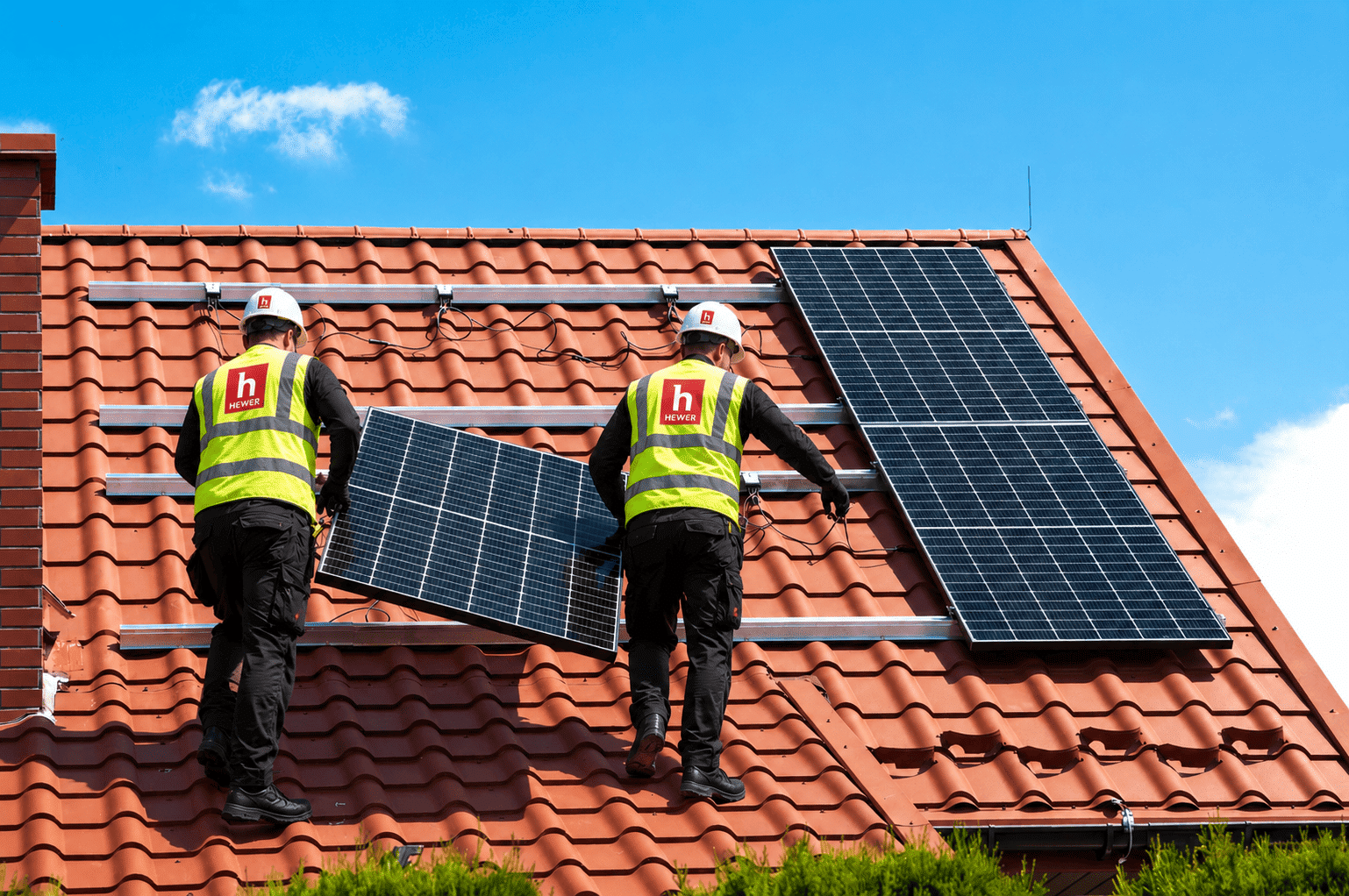
Battery storage works best when it’s sized properly against your heat pump, your tariff, and how the household actually uses energy through the day. We design combined solar PV and battery storage systems for homes throughout Gloucestershire and the South West. If you’re also thinking about a new heat pump, our 2026 Boiler Upgrade Scheme offer is worth a look. Spreading the cost is straightforward too. We offer 0% finance on solar PV and battery storage, so you can start cutting your bills without the full outlay upfront. Ask us for current terms.
Get a solar PV and battery storage quote and we’ll size the battery properly for your home and your tariff.
Quick answers
Can I add battery storage to an existing heat pump?
Yes. Batteries are a separate system that sits alongside your heat pump and solar PV, so they can be retrofitted at any point. The savings only really kick in once you move to an off-peak or time-of-use tariff.
Do I need solar PV to make battery storage worthwhile?
No. A battery on an off-peak tariff pays back on its own by shifting usage to the cheap hours. Solar on top just adds to it.
How long does a home battery last?
Most decent home batteries come with a 10 year warranty and keep working well past that. Usable capacity tapers slowly over the unit’s lifetime, not all at once.